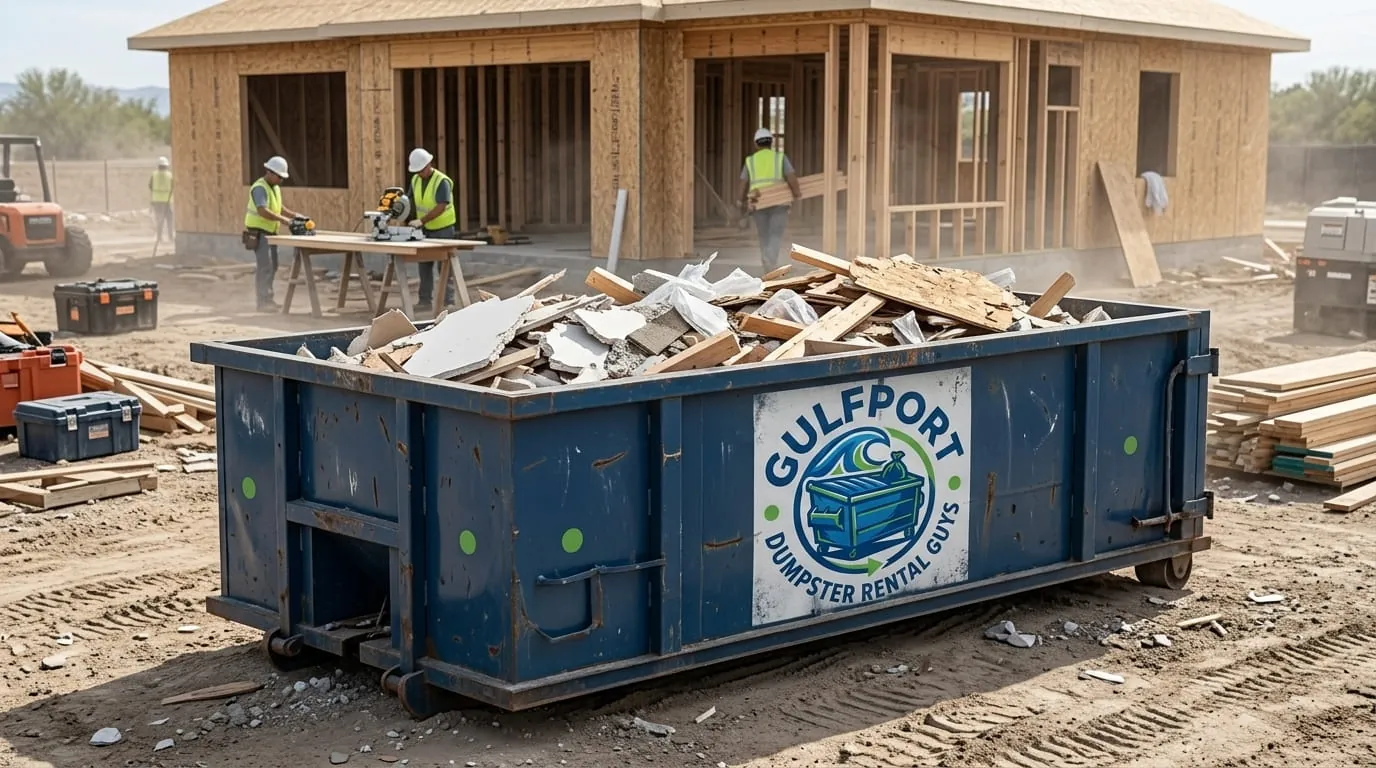
Construction Debris Disposal the Right Way on the Mississippi Gulf Coast
Every renovation, teardown, and storm rebuild produces the same thing: piles of construction and demolition (C&D) debris that have to go somewhere. Do it right and your job site stays clear, safe, and inspection-ready. Do it wrong and you are looking at overweight fees, rejected loads at the transfer station, blocked walkways, and even code violations. On the Gulf Coast, where humidity accelerates rot and hurricane season can bury a property in wet framing overnight, handling debris well is part of doing the job professionally.
This guide walks through how we help Gulfport contractors and homeowners manage construction debris disposal from the first swing of the hammer to the final haul-off.
Start by Sorting: Know Your Debris Streams
The single biggest mistake we see is treating every scrap the same. C&D debris is not one material, it is five or six, and each one is handled, weighed, and recycled differently. Sorting at the source costs you a few extra minutes and saves real money at disposal.
The Main C&D Categories
- Wood - framing lumber, plywood, OSB, trim, and pallets. Clean, untreated wood is often recyclable into mulch or biomass. Painted, stained, or pressure-treated wood is not, so keep it separate.
- Drywall / gypsum - lightweight but bulky, and it absorbs water fast in our humidity. Wet drywall grows heavy and moldy quickly, so bag it or load it promptly.
- Metal - copper pipe, aluminum flashing, steel studs, rebar, ductwork, and appliances. This is your most valuable scrap. Pull it out and it may pay for itself.
- Roofing - asphalt shingles, underlayment, and felt. Shingles are dense and heavy, and many facilities recycle them into road base.
- Concrete, brick, and masonry - the heaviest material on any site. This should almost always be kept in its own container.
Rule of thumb from our crews: if you can crush it, grind it, or melt it, someone probably recycles it. Mixed, contaminated loads get landfilled and cost more. Clean, sorted loads move faster and cheaper.
What Is Actually Recyclable
Along the Mississippi Gulf Coast, a surprising amount of C&D debris can be diverted from the landfill when it is sorted:
- Clean wood - mulch, chips, biomass fuel.
- Metal - nearly always recyclable and often has scrap value.
- Concrete and masonry - crushed into aggregate and road base.
- Asphalt shingles - recycled into paving material at facilities that accept them.
- Cardboard and clean packaging - standard recycling.
Drywall recycling exists but is limited regionally, and anything containing suspected asbestos (older popcorn ceilings, old floor tile, some siding on pre-1980s homes) must be tested and handled by a licensed abatement contractor. Never toss suspect material in a general dumpster.
Keep Heavy Material Separate
This is the tip that saves contractors the most money. Concrete, brick, block, dirt, and roofing are dense. A dumpster can hit its weight limit long before it looks full, and mixing heavy debris with light debris wrecks your economics two ways: you pay overage fees on the heavy stuff, and you waste the volume you paid for on the light stuff.
The fix is simple: dedicate a container to heavy material. Many disposal facilities give you a better rate on a clean load of concrete or masonry because it goes straight to a recycler instead of the landfill. If your project involves slab removal, driveway demo, or foundation work, talk to us about a dedicated concrete and heavy debris container sized and priced for that weight.
Right-Size Your Container and Plan the Swaps
Ordering the wrong size is the second most common misstep. Too small and you are paying for extra hauls or letting debris pile up on the ground. Too big and you are paying for air. Match the container to the job.
| Project Type | Typical Debris | Suggested Container |
|---|---|---|
| Single-room remodel / bath or kitchen | Drywall, cabinets, flooring, fixtures | 10-15 yard |
| Roof tear-off (average home) | Shingles, felt, decking | 20 yard (heavy debris) |
| Whole-home renovation | Mixed wood, drywall, trim, flooring | 30 yard |
| Demolition / storm rebuild | Framing, roofing, mixed C&D | 30-40 yard |
| Concrete / slab removal | Concrete, brick, masonry | Dedicated heavy container |
For most full-scale renovations and rebuilds, a 30-yard dumpster is the workhorse: enough volume for bulky mixed debris without overkill. For big demolition or a major storm cleanout, plan for scheduled swaps so the crew never stops working. We coordinate construction dumpster rentals with swap-outs timed to your phases, so a full container gets hauled and replaced the same day whenever possible.
Load It Smart
- Load flat, heavy, and bulky items first, then fill gaps with smaller debris.
- Break down boxes, cabinets, and hollow items so you are not hauling empty space.
- Never load above the top rail - overfilled containers cannot be legally or safely transported.
- Keep the loading area clear and the container on a firm, level surface off soft or saturated ground.
Keep the Job Site Clear and Safe
A tidy site is a safe site. Loose debris means nail punctures, trip hazards, and OSHA headaches. Position the dumpster where crews can reach it without crossing work zones, sweep the pad daily, and pull protruding fasteners as you go. On DIY renovations, the same discipline keeps kids, pets, and neighbors out of harm's way. A steady flow of debris into the container, rather than a mountain in the driveway, also keeps the peace with the city and the folks next door.
The Gulf Coast Angle: Storms and Humidity
Debris on the Mississippi Gulf Coast has its own personality. After a hurricane or tropical storm, rebuild debris shows up soaked and mixed - wet drywall, waterlogged framing, ruined insulation, and roofing all at once. Wet material weighs far more than dry, so storm debris almost always calls for a bigger or heavier-rated container than the volume alone suggests.
Our year-round humidity does the same thing on a slower timeline. Drywall, subfloor, and framing that sit exposed will pull moisture, gain weight, and start growing mold within days. That is why we push teardown crews to load promptly rather than letting piles marinate in the heat. For post-storm and large teardown work, our demolition debris removal service pairs the right containers with a hauling schedule built for wet, heavy loads.
Need a container on site fast? Call Gulfport Dumpster Rental Guys at (228) 678-7239 and we will match the size to your job.
Dispose Legally - Every Time
Legal disposal protects you from fines and liability. A few non-negotiables:
- No illegal dumping. Roadside, vacant-lot, or dumpster-diving disposal of C&D debris carries serious penalties in Mississippi.
- Keep hazardous materials out. Paint, solvents, adhesives, asbestos, and treated materials require special handling and cannot go in a standard construction dumpster.
- Use permitted facilities. When you rent through a licensed hauler, your debris goes to an approved transfer station, recycler, or landfill - and that paper trail matters.
- Mind the right-of-way. If a container has to sit on a public street, some Gulf Coast municipalities require a permit. Ask before you place it.
The easiest way to stay compliant is to let the hauler own the disposal end. We know which facilities take what, where the recyclers are, and how to keep your loads clean and legal.
Ready to Clear Your Site?
Whether you are gutting a bathroom, tearing off a roof, or rebuilding after a storm, sorting your debris, keeping heavy material separate, right-sizing your container, and scheduling smart swaps will keep the job moving. We handle the rest. Reach out through our contact page or call (228) 678-7239 to line up the right dumpster for your Gulfport-area project today.

Founder, Gulfport Dumpster Rental Guys — sharing straight advice from more than 15 years of local hauling experience.
Frequently Asked Questions
What counts as construction and demolition (C&D) debris?
C&D debris is the material generated by building, renovating, or tearing down structures. It typically includes wood, drywall, metal, roofing shingles, concrete, brick, insulation, flooring, and fixtures. It does not include hazardous waste like paint, solvents, or asbestos, which require special handling.
Can I mix concrete with other construction debris in one dumpster?
It is best not to. Concrete, brick, and masonry are extremely heavy and can push a mixed container over its weight limit fast, triggering overage fees. Keeping heavy material in its own dedicated container is usually cheaper and lets the concrete go straight to a recycler for crushing into aggregate.
What size dumpster do I need for a home renovation in Gulfport?
For a full-home renovation, a 30-yard dumpster is usually the right call - it handles bulky mixed debris without wasting money on unused space. Smaller single-room projects often fit a 10 to 15 yard container. Call (228) 678-7239 and we will match the size to your specific job.
How do I handle wet or storm-damaged debris on the Gulf Coast?
Load it promptly. Wet drywall, framing, and insulation gain a lot of weight and grow mold quickly in our humidity, so soaked storm debris usually needs a heavier-rated or larger container than dry material. Our demolition debris removal service pairs the right container with a hauling schedule built for heavy, wet loads.
Is construction debris recyclable?
Much of it is when sorted at the source. Clean wood becomes mulch or biomass, metal is nearly always recyclable and often has scrap value, concrete and masonry are crushed into road base, and many facilities recycle asphalt shingles into paving material. Mixed, contaminated loads generally get landfilled, so sorting saves both money and material.