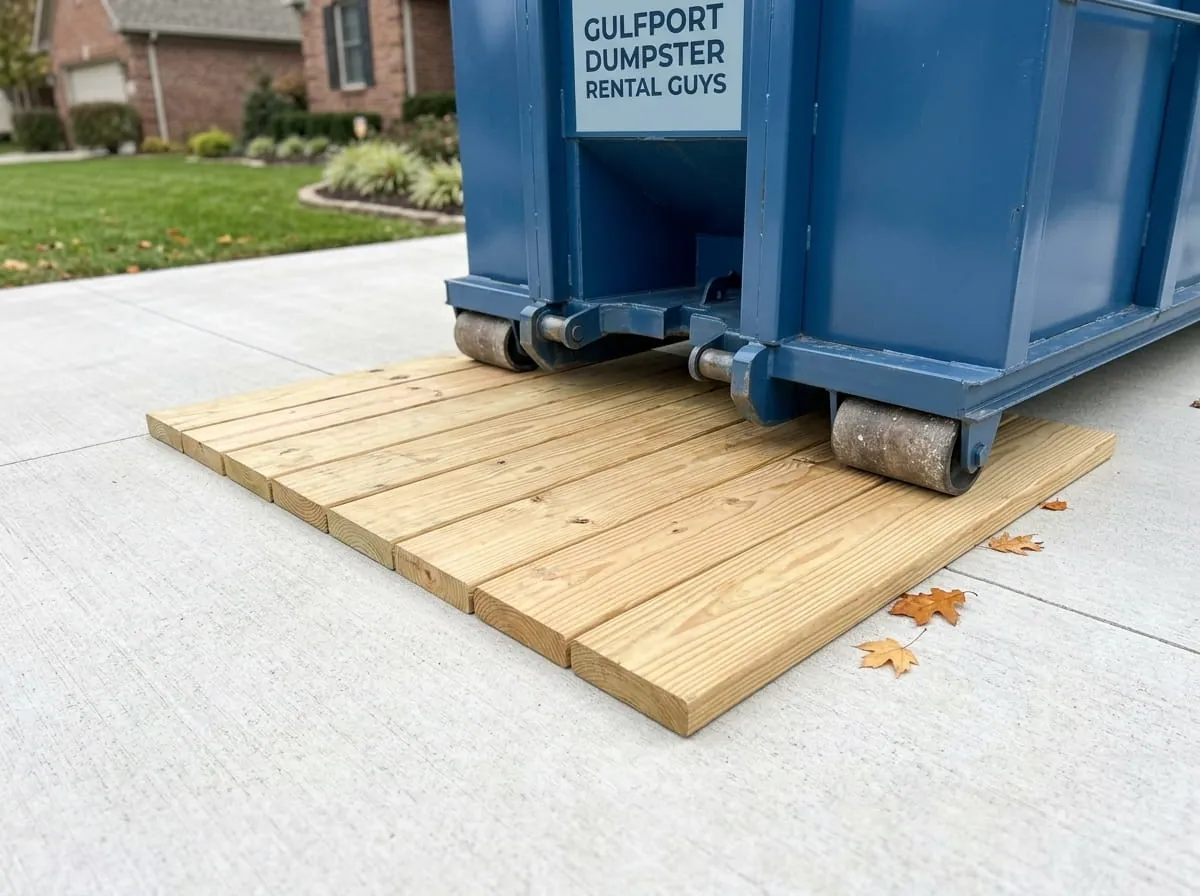
A roll-off dumpster is one of the most useful things you can park in your driveway during a cleanout, remodel or roof tear-off. It is also one of the heaviest. An empty 10-yard bin already weighs a couple of thousand pounds, and once it is loaded it can push well past that. All of that weight rides on a few small steel contact points, and it lands on whatever surface you put it on. On the Mississippi Gulf Coast, where summer asphalt gets soft and slabs already fight our sandy, shifting soils, a little planning goes a long way toward keeping your driveway looking the way it did before the bin showed up.
Here is the good news up front: driveway damage from a dumpster is almost entirely preventable. It comes down to understanding how the bin actually loads your surface, putting the right protection under it, right-sizing the container so the weight stays reasonable, and working with a company that places the bin carefully. Let's walk through all of it.
How a roll-off can damage a driveway
Most homeowners picture a dumpster as one big weight spread evenly across the driveway. It is the opposite. The load concentrates on a handful of small spots, and that concentration is what causes trouble.
Point loading on wheels and rails
A roll-off does not sit flat on its belly. It rests on two rear wheels and a set of steel rails or feet along the bottom. Those contact points are only a few square inches each, so the entire weight of the bin plus your debris presses down through them. That is called point loading, and it is why you can have a driveway that easily handles a parked car yet still ends up with dents or divots under a dumpster. A car spreads its weight over four broad tires; a loaded roll-off drives thousands of pounds through a few narrow steel points.
Dragging during delivery and pickup
The other big risk happens in the few seconds the bin is moving. Roll-offs are delivered by tilting the truck bed and rolling or sliding the container down onto your surface, then winching it back up at pickup. If the bin drags even slightly, those steel rails can scrape and gouge. On concrete you get scuff marks and surface scratches; on asphalt or pavers you can get real dragging damage. This is where the driver's skill and a little protection matter most.
Weight over time
A bin that sits for a day or two is rarely a problem. A heavily loaded container that sits for a couple of weeks is a different story, because the same point loads are pressing continuously. Softer surfaces slowly deform around the contact points, leaving impressions that do not fully bounce back.
Heat softening asphalt in Gulf Coast summers
This is the big local one. When Gulfport afternoons climb into the 90s with our humidity, asphalt surface temperatures can get dramatically hotter than the air. Hot asphalt gets pliable, and pliable asphalt takes an impression from a steel wheel or rail far more easily than cool asphalt does. A dumpster that would sit harmlessly on the same driveway in February can leave dents in the peak of a July afternoon. If you are renting in summer, protection under the contact points is not optional, it is the whole ballgame.
The single most effective thing a homeowner can do is put a barrier between the dumpster's steel contact points and the driveway surface. It spreads the load, prevents dragging scuffs, and it costs almost nothing compared to resurfacing.
How to protect your driveway
You do not need special equipment. A few sheets of plywood and a little forethought handle the vast majority of situations.
Put plywood or boards under the contact points
Lay down two or more sheets of 3/4-inch plywood, or a few thick planks, where the bin's wheels and rails will land. The goal is to spread that concentrated point load across a much larger area so no single spot takes the full pressure. Two layers is even better for a heavy load or a long rental. Position the boards so they cover both the resting points and the path the bin travels as it rolls off the truck, since that is where dragging happens. Let the delivery company know you have boards down so the driver can aim for them.
Choose the right surface
If you have options, think about where the bin goes before it arrives. In order of durability, concrete handles a dumpster best, asphalt is more vulnerable (especially in heat), and pavers are the most delicate because individual units can shift, crack or sink. If a gravel pad, a corner of the yard, or a concrete apron is available and practical, it may be a better home for the bin than a fresh asphalt driveway. That said, avoid soft or soggy ground, which we have plenty of after Gulf Coast rains, because a bin can sink and become impossible to retrieve cleanly.
Right-size the container so weight stays reasonable
Bigger is not always safer. A container that is oversized for your project tempts you to keep piling debris, and every extra pound rides through those same small contact points. Matching the bin to the job keeps the total weight sensible and reduces the load your driveway carries. For many household cleanouts and small remodels, a 10-yard dumpster has a smaller footprint and lighter loaded weight than the big boxes, which is easier on a driveway. If you are unsure what size fits your project, our team is happy to help you pick.
Special care for pavers
Paver driveways deserve extra caution. Point loads can crack individual pavers or press them down unevenly, and dragging can chip edges. Always use a full, continuous plywood platform, not just a board under each wheel, so the load bridges across many pavers instead of concentrating on a few. If your paver drive is a showpiece, seriously consider placing the bin on the street (with a permit) or on a sturdier surface instead.
How a good company places the bin
A lot of driveway protection comes down to who is behind the wheel. An experienced driver approaches placement deliberately: choosing an approach that avoids curbs and lips, easing the container down slowly rather than letting it drop, and setting it so it does not have to be repositioned. At Gulfport Dumpster Rental Guys, we ask about your surface before we arrive, we set bins down gently, and we are glad to place the container on boards you have laid out. We would rather take an extra minute on delivery than have you looking at a divot after pickup. You can see everything we offer on our services page.
It is also worth thinking about placement rules. If you would rather keep the bin off your driveway entirely and put it at the curb, you may need city approval first. Our guide on whether you need a permit for a dumpster in Gulfport, MS walks through when that applies.
Call Gulfport Dumpster Rental Guys at (228) 678-7239 and tell us about your driveway. We will help you choose the right size and place the bin the right way.
Quick driveway protection checklist
- Lay 3/4-inch plywood (double up for heavy or long rentals) under the wheels and rails.
- Cover the roll-off path, not just the resting spots, to stop dragging scuffs.
- Prefer concrete over asphalt, and protect pavers with a continuous platform.
- Avoid soft, soggy or freshly sealed surfaces.
- Right-size the bin so you are not carrying unnecessary weight.
- In summer heat, treat protection as mandatory, not optional.
- Tell the driver your surface and where your boards are before delivery.
- Do not let a loaded bin sit for weeks longer than you need it.
The bottom line
A dumpster rental should make your project easier, not leave you with a repair bill. The steel wheels and rails of a roll-off concentrate a lot of weight on a few small spots, dragging can scuff on delivery, and our Gulf Coast summer heat makes asphalt especially vulnerable. Slide some plywood under the contact points, pick the sturdiest surface you reasonably can, match the container to your project, and work with a company that places the bin with care. Do those things and your driveway will look exactly the same when the bin rolls away.
Ready to book, or just have questions about your surface? Contact us or call (228) 678-7239 and we will take care of the rest.

Founder, Gulfport Dumpster Rental Guys — sharing straight advice from more than 15 years of local hauling experience.
Frequently Asked Questions
Will a dumpster crack my concrete driveway?
It is unlikely on sound concrete, since concrete handles the point loads from a roll-off better than any other common driveway surface. The bigger risk on concrete is surface scuffing or scratching from the steel rails during delivery or dragging. A sheet of plywood under the contact points and a careful driver prevent almost all of it.
Do I really need plywood under the dumpster?
For a short rental on cool, solid concrete you may be fine without it, but we recommend boards in nearly every case. On asphalt, pavers, in summer heat, or for any rental lasting more than a day or two, plywood under the wheels and rails is cheap insurance against dents, impressions and dragging scuffs.
Why is summer heat a problem for asphalt driveways?
On hot Gulfport afternoons, asphalt surface temperatures climb well above the air temperature and the surface softens. Soft asphalt takes an impression from a heavy steel wheel or rail far more easily than cool asphalt. A bin that would sit harmlessly in winter can leave dents in July, so protection under the contact points is essential in summer.
What size dumpster is easiest on my driveway?
A right-sized container is always easier on your driveway than an oversized one, because you are not tempted to overload it. For many home cleanouts and small remodels a 10-yard dumpster has a smaller footprint and lighter loaded weight. Call us and we will match the size to your actual project so the weight stays reasonable.
Can you put the dumpster on the street instead of my driveway?
Often yes, and it is a good option if you have delicate pavers or a freshly sealed drive. Keep in mind that placing a dumpster on a public street in Gulfport may require city approval first. Ask us and check our permit guide, and we will help you figure out the best legal spot for the bin.